Haptoglobin (Hp) is a critical protein in the body’s immune and inflammatory responses. It is primarily produced by the liver and serves a vital role in binding free hemoglobin released during hemolysis. Its levels can be indicative of various physiological and pathological conditions, making it an essential biomarker in clinical diagnostics and research. Measuring haptoglobin levels with Hpt/HP ELISA Kits has become a standard practice in laboratories worldwide due to the sensitivity, accuracy, and convenience these assays provide. In this comprehensive guide, we will explore the structure and function of haptoglobin, the applications of HP ELISA kits, and provide detailed information on how to perform and interpret these tests.
Introduction to Haptoglobin: Function and Importance
Haptoglobin is a glycoprotein that plays a crucial role in the body’s defense mechanism by binding free hemoglobin, preventing oxidative damage and iron loss. It is an acute-phase protein, which means that its levels increase during systemic inflammation and infection. The haptoglobin gene exhibits polymorphism, particularly with two major alleles—Hp1 and Hp2—which influence its functional properties (NIH.gov).
Key Functions of Haptoglobin:
-
Hemoglobin Binding: Haptoglobin binds to free hemoglobin released from red blood cells, forming a stable complex. This complex is then cleared by macrophages, preventing the toxic effects of free hemoglobin (PubMed).
-
Anti-inflammatory Role: As an acute-phase reactant, Hp levels rise in response to inflammation, infection, and tissue injury. Its levels are often used as a biomarker for these conditions (NCBI).
-
Antioxidant Properties: By binding hemoglobin, haptoglobin helps prevent the production of free radicals that could damage tissues.
Clinical Applications of Haptoglobin Measurement
Measuring haptoglobin levels is vital for the diagnosis and monitoring of various conditions, including:
-
Hemolytic Anemia: Low haptoglobin levels are commonly associated with hemolysis, where red blood cells are destroyed prematurely. This can be diagnosed and monitored through Hp testing (ScienceDirect).
-
Inflammatory Diseases: Elevated haptoglobin levels are observed in inflammatory conditions, such as sepsis, rheumatoid arthritis, and cardiovascular disease. Monitoring Hp can help assess disease activity and prognosis (PubMed).
-
Liver Function Monitoring: Since haptoglobin is produced in the liver, its levels can indicate liver function or dysfunction. Low levels may suggest liver disease or impairment (NIH.gov).

Haptoglobin (Hp) ELISA Kits: Overview and Features
Haptoglobin ELISA kits provide a reliable, non-invasive method for quantifying haptoglobin in a variety of biological samples, including serum, plasma, and urine. These kits typically use the sandwich ELISA technique, which involves a capture antibody to specifically bind haptoglobin, and a detection antibody conjugated to an enzyme for signal amplification.
Key Features of HP ELISA Kits:
-
High Sensitivity: ELISA kits for haptoglobin can detect even low concentrations of the protein, making them ideal for clinical diagnostics and research applications (ThermoFisher).
-
Wide Range: These kits offer a broad detection range, typically from picogram to microgram levels, allowing for both high- and low-concentration measurements.
-
Reproducibility: ELISA is known for its reproducibility across different laboratories and samples, ensuring reliable results (Addgene).
-
Versatility: Available for use in a variety of species, including humans, mice, and other animals, making them suitable for preclinical and clinical research (Proteintech).
Understanding the ELISA Process: A Step-by-Step Guide
The ELISA process typically involves several key steps that are standard across many types of assays, including the measurement of haptoglobin. Here is an overview of the process:
Plate Preparation:
-
Coating the Plate: The first step involves coating the microplate wells with a capture antibody that specifically binds to haptoglobin. This is typically done overnight at 4°C.
Sample Addition:
-
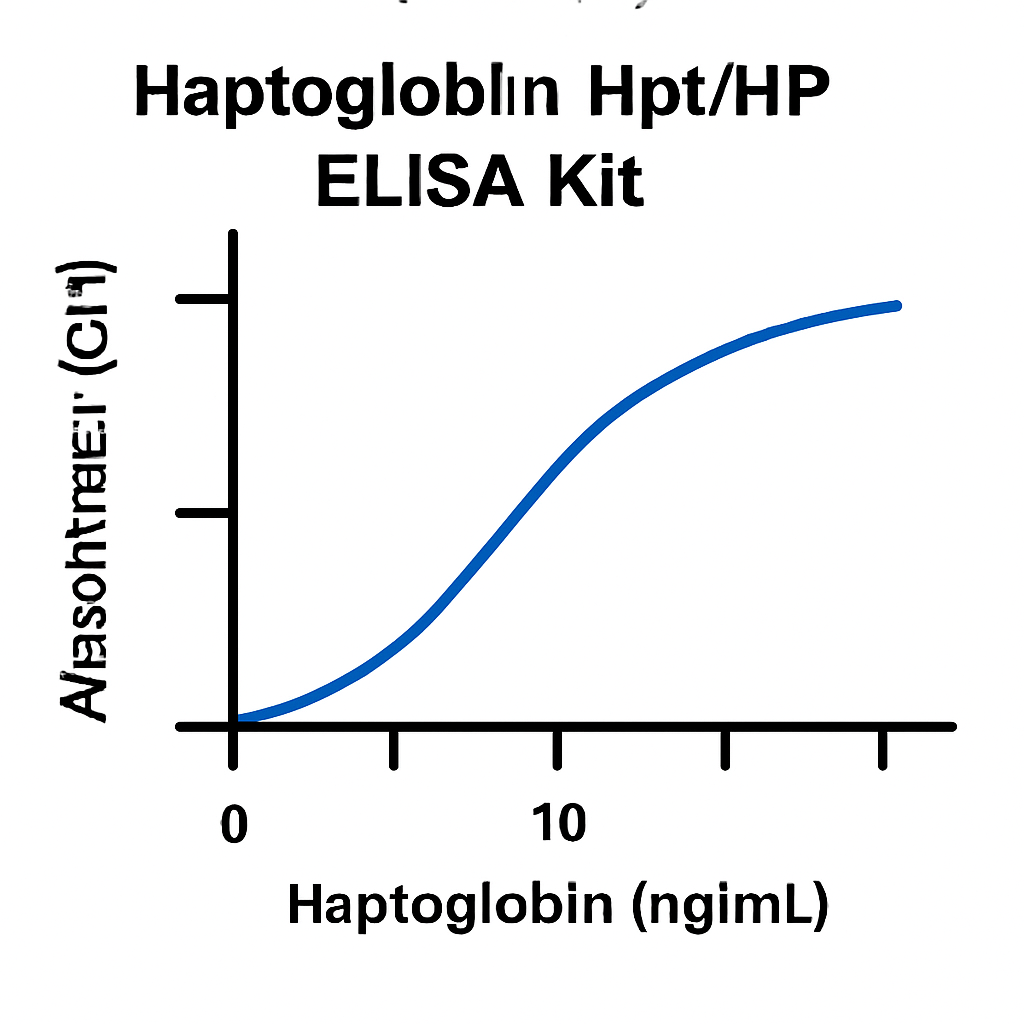
Adding Standards and Samples: After blocking the plate to prevent non-specific binding, samples and standards are added to the wells. Standards are prepared with known concentrations of haptoglobin, which allow the generation of a standard curve for quantification.
Binding and Detection:
-
Detection Antibody: After incubation, a biotinylated detection antibody specific to haptoglobin is added, followed by incubation to allow binding. The secondary antibody, typically conjugated to horseradish peroxidase (HRP), binds to the detection antibody.
Signal Generation:
-
Substrate Addition: A substrate is added that reacts with the enzyme HRP, producing a color change. The intensity of the color is directly proportional to the amount of haptoglobin present in the sample.
Measurement:
-
Absorbance Reading: The plate is then read at 450 nm using a microplate reader. The absorbance values are used to calculate the concentration of haptoglobin in the samples based on the standard curve.
Common Applications of Haptoglobin ELISA Kits
The versatility of HP ELISA kits makes them invaluable in both clinical diagnostics and research:
Inflammatory and Infectious Diseases:
Haptoglobin is an important marker in the assessment of inflammation and infection. It is widely used in:
-
Monitoring systemic inflammation in conditions like sepsis and rheumatoid arthritis.
-
Evaluating disease progression in inflammatory bowel disease (IBD) and cardiovascular diseases (PubMed).
Hemolytic Disorders:
Hp ELISA kits are critical in diagnosing and monitoring conditions such as:
-
Hemolytic anemia, where low haptoglobin levels are a sign of red blood cell destruction.
-
Transfusion reactions, where hemolysis occurs due to incompatible blood transfusions (NCBI).
Liver Disease:
As haptoglobin is synthesized in the liver, its levels can provide insight into:
-
Liver function, helping to diagnose conditions such as cirrhosis and hepatitis.
-
Hepatocellular injury, where haptoglobin levels may be altered (National Institutes of Health).
Cancer Research:
Elevated haptoglobin levels have been linked to various cancers, including:
-
Ovarian cancer, where Hp has been used as a biomarker for early detection (PubMed).
-
Prostate cancer, where increased Hp levels correlate with disease progression.
Advantages of Using HP ELISA Kits in Research and Diagnostics
The widespread adoption of HP ELISA kits is attributed to their numerous advantages:
High Throughput:
ELISA kits allow the processing of numerous samples at once, making them suitable for large-scale studies.
Non-Invasive:
These assays require only small blood or plasma samples, which makes them less invasive compared to other diagnostic methods like biopsies.
Quantitative Results:
The precise quantification of haptoglobin enables researchers and clinicians to track disease progression and evaluate therapeutic responses (Addgene).
Ease of Use:
HP ELISA kits are straightforward to use, and the protocols are easy to follow. Many kits come with comprehensive instructions and ready-to-use reagents, reducing the potential for errors.
Troubleshooting and Tips for Accurate Results
To ensure accurate and reproducible results, it is crucial to adhere to best practices:
-
Proper Plate Coating: Ensure the capture antibody is evenly coated and incubated for the correct amount of time.
-
Consistent Sample Handling: Use fresh samples or store them properly to avoid degradation.
-
Avoid Contamination: Use separate tips for each sample and standard to avoid cross-contamination.
-
Ensure Correct Washing: Inadequate washing can result in high background signals and inaccurate results.
Future Developments in Hp Measurement and ELISA Technology
With ongoing advancements in biotechnology, we can expect the following developments in Hp ELISA kits and related technologies:
-
Point-of-Care Testing: Rapid, portable devices are being developed to enable on-site measurements of Hp in resource-limited settings.
-
Nanotechnology-Based Detection: Nanoparticles are being integrated into ELISA assays to enhance sensitivity and reduce detection times.
-
Multiplexing: Future ELISA kits may allow the simultaneous detection of multiple biomarkers, including haptoglobin, to improve diagnostic efficiency.
Conclusion
Haptoglobin (Hp) and Hpt/HP ELISA kits are indispensable tools in both clinical and research laboratories. Their ability to measure haptoglobin levels accurately makes them essential in diagnosing and monitoring a range of diseases, from hemolytic anemia to inflammatory disorders and liver disease. By following optimized protocols, researchers can ensure reliable results and contribute valuable data to clinical practices and scientific research. With continued advancements in ELISA technology, these assays will become even more efficient and versatile, opening new doors for disease detection and treatment.
References: