Introduction
Cathepsin B is a cysteine protease primarily found in lysosomes, where it plays a crucial role in protein degradation, antigen processing, and tissue remodeling. It is involved in numerous physiological and pathological processes, including apoptosis, inflammation, and cancer metastasis. The ability to accurately measure Cathepsin B activity is essential for understanding its biological functions and for the development of therapeutic strategies targeting this enzyme.
The Cathepsin B Activity Fluorometric Assay Kit is a widely used tool for measuring Cathepsin B activity in various biological samples. This assay utilizes a fluorogenic substrate that, upon cleavage by Cathepsin B, emits fluorescence, providing a sensitive and quantitative method for assessing enzyme activity.
This article provides an in-depth look at the Cathepsin B Activity Fluorometric Assay Kit, including its principles, applications, and step-by-step protocol, along with practical tips for optimizing results.

What is Cathepsin B and Why is It Important?
Cathepsin B is a lysosomal cysteine protease that is essential for intracellular protein degradation. It plays a vital role in various cellular processes, including:
-
Protein Processing: Cathepsin B is involved in the degradation of cellular proteins, helping maintain cellular homeostasis by removing damaged or unnecessary proteins.
-
Antigen Presentation: It participates in the processing of antigens for presentation by major histocompatibility complex (MHC) molecules.
-
Extracellular Matrix Remodeling: Cathepsin B is crucial for the breakdown of extracellular matrix components, a process involved in tissue remodeling, wound healing, and metastasis.
-
Apoptosis: It also regulates apoptosis by cleaving key apoptotic proteins, thus contributing to programmed cell death.
The enzyme’s role in diseases like cancer, neurodegenerative disorders, and inflammatory diseases highlights its importance as a therapeutic target. Understanding Cathepsin B activity can provide valuable insights into the progression of these diseases and aid in developing targeted treatments.
For further information on Cathepsin B’s role in diseases, see the following references:
Principle of the Cathepsin B Activity Fluorometric Assay Kit
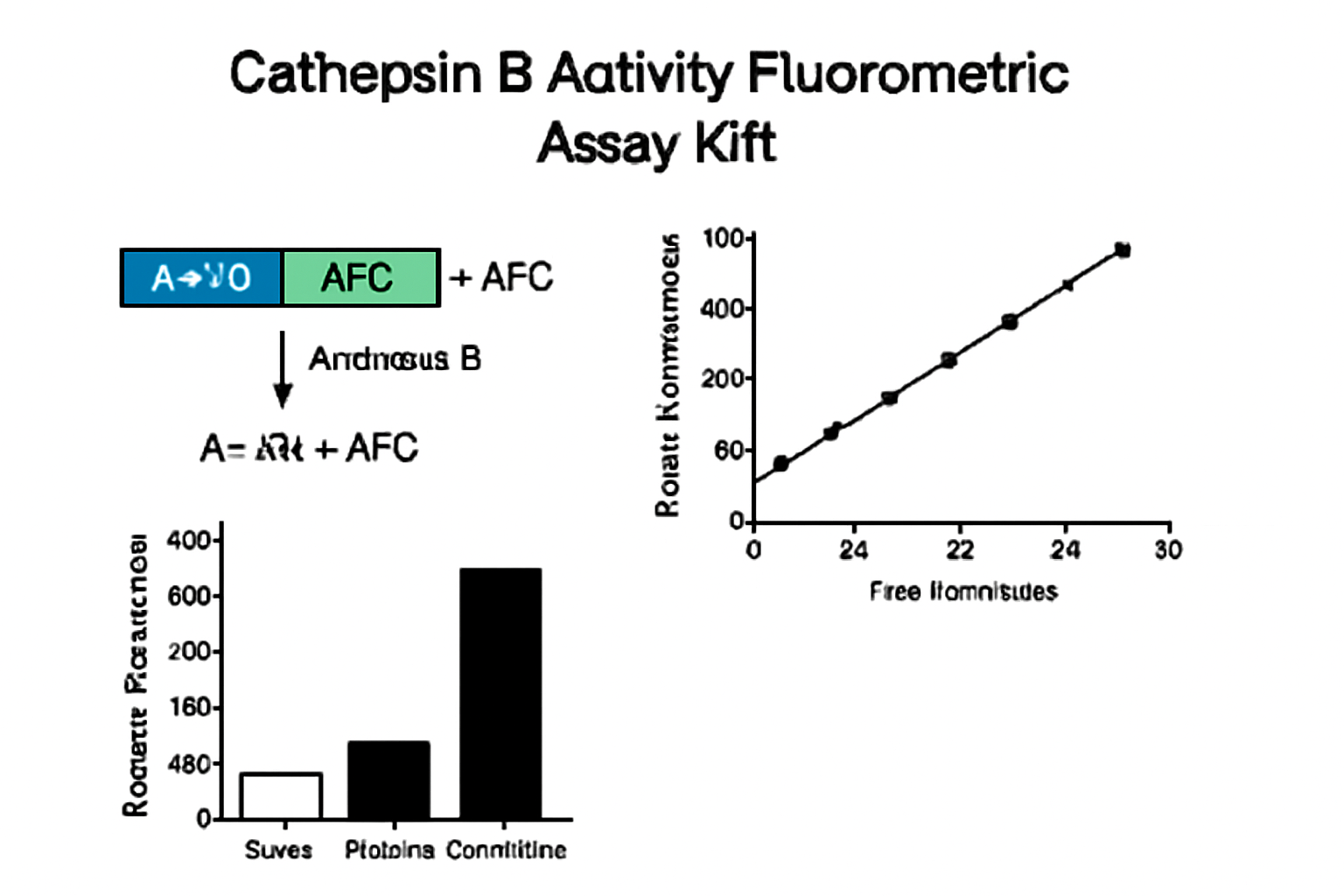
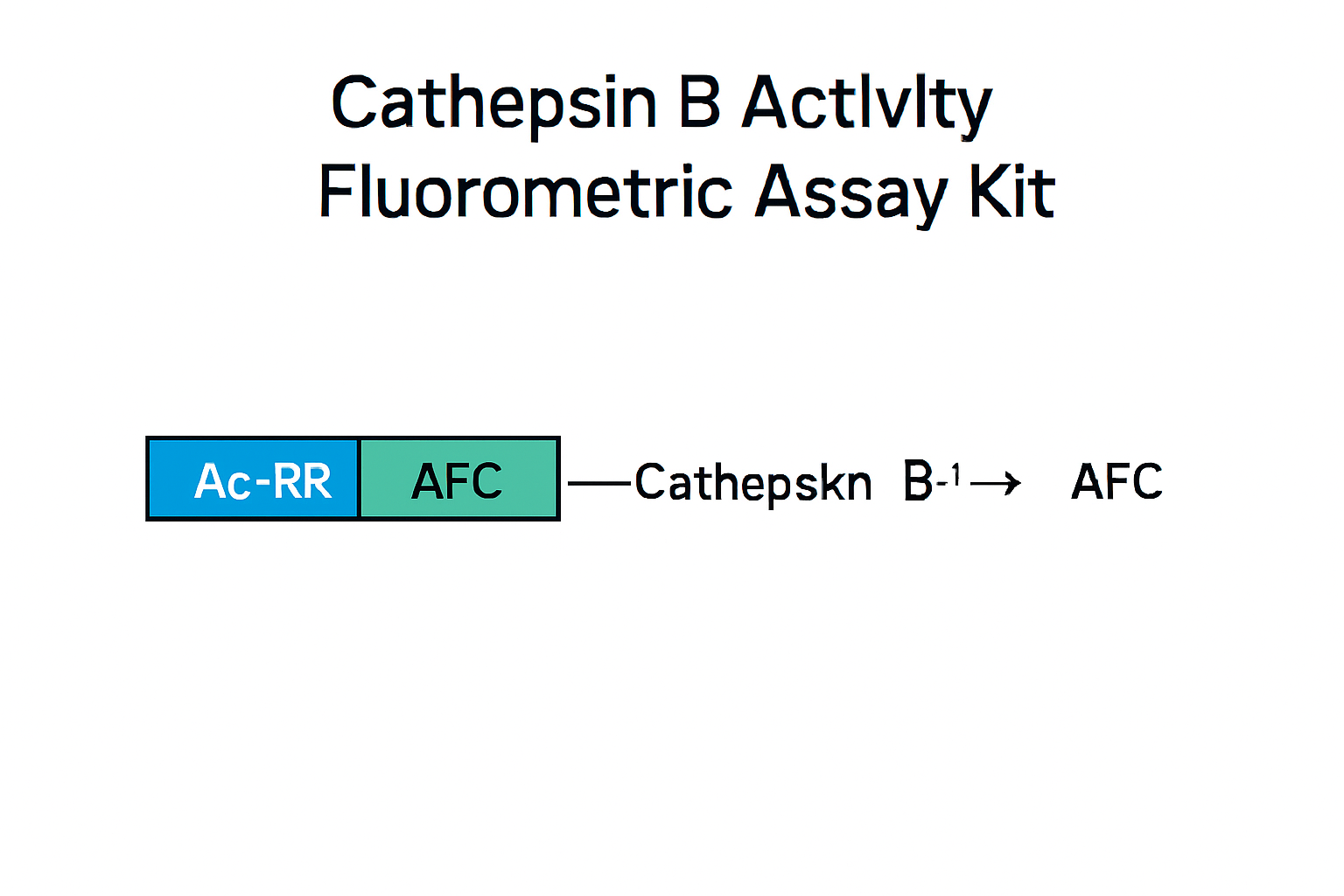
The Cathepsin B Activity Fluorometric Assay Kit utilizes a synthetic fluorogenic peptide substrate that is specifically cleaved by Cathepsin B. The cleavage results in the release of a fluorogenic product that emits fluorescence when excited at a specific wavelength. The intensity of the emitted fluorescence correlates with the amount of active Cathepsin B present in the sample.
This assay is highly sensitive and specific, allowing researchers to detect even small amounts of Cathepsin B activity in complex biological samples, including cell lysates, tissue homogenates, and biological fluids like plasma or serum. The fluorometric nature of the assay also provides a quantitative readout, making it ideal for high-throughput screening.
To optimize your results and better understand assay performance, it’s essential to understand the key factors affecting fluorescence-based measurements, such as temperature, substrate concentration, and assay incubation time.
Components of the Cathepsin B Activity Fluorometric Assay Kit
A typical Cathepsin B Activity Fluorometric Assay Kit includes the following components:
-
Cathepsin B Substrate: A fluorogenic peptide substrate specifically cleaved by Cathepsin B. The substrate is designed to generate a detectable fluorescence signal when cleaved.
-
Reaction Buffer: The buffer ensures the proper pH and ionic conditions required for optimal Cathepsin B activity.
-
Inhibitor: A specific Cathepsin B inhibitor is provided to serve as a negative control, ensuring that the fluorescence observed is due to Cathepsin B activity and not non-specific cleavage.
-
Standard: A known concentration of active Cathepsin B is included to generate a standard curve for quantification.
-
96-Well Microplate: The kit includes a microplate suitable for fluorescence measurement, allowing for high-throughput analysis.
Step-by-Step Protocol for Cathepsin B Activity Assay
Sample Preparation
-
Cell Lysates:
-
Harvest cells and lyse them using a buffer suitable for protein extraction.
-
Quantify the protein concentration using a standard protein assay method, such as the BCA protein assay or Bradford assay.
-
-
Tissue Homogenates:
-
Homogenize tissues in a buffer containing protease inhibitors to prevent degradation of Cathepsin B during the extraction process.
-
Centrifuge to remove debris and collect the supernatant for analysis.
-
-
Biological Fluids (Plasma, Serum, etc.):
-
Collect biological fluids such as plasma or serum, and dilute appropriately if needed.
-
Assay Setup
-
Add Samples: Dispense 50 µL of each sample or standard into the wells of a 96-well microplate.
-
Prepare Reaction Mixture: Mix the Cathepsin B substrate with the reaction buffer as per the kit instructions. The final substrate concentration should be optimized for your specific assay.
-
Inhibitor Control: Add the Cathepsin B inhibitor to the designated wells to confirm that observed fluorescence is specifically due to Cathepsin B activity.
Incubation and Measurement
-
Incubate: Place the microplate in a 37°C incubator for 30–60 minutes, depending on the kit instructions.
-
Fluorescence Measurement: Measure the fluorescence intensity at an excitation wavelength of 360 nm and an emission wavelength of 460 nm using a fluorescence microplate reader.
-
Data Analysis: Subtract the background fluorescence from all readings, then calculate the Cathepsin B activity by comparing the sample fluorescence to the standard curve.
Applications of the Cathepsin B Activity Fluorometric Assay Kit
The Cathepsin B Activity Fluorometric Assay Kit has wide applications in several research areas, including:
-
Cancer Research:
-
Cathepsin B plays a significant role in cancer metastasis by degrading extracellular matrix components. Quantifying its activity helps in understanding tumor progression and invasion.
-
Studies have shown that Cathepsin B inhibitors can reduce tumor growth and metastasis, making it a potential therapeutic target. (National Cancer Institute)
-
-
Neurodegenerative Diseases:
-
In neurodegenerative diseases like Alzheimer’s and Parkinson’s, Cathepsin B is implicated in the degradation of cellular components and the accumulation of misfolded proteins.
-
Monitoring Cathepsin B activity can provide insights into disease mechanisms and potential therapeutic interventions. (NIH Alzheimer’s Disease Information)
-
-
Inflammatory Disorders:
-
Cathepsin B is involved in the inflammatory response and tissue damage associated with diseases like rheumatoid arthritis and inflammatory bowel disease (IBD).
-
Measuring Cathepsin B activity can help assess the severity of inflammation and monitor the effectiveness of anti-inflammatory therapies. (NIH Inflammation Research)
-
-
Drug Discovery and Screening:
-
The Cathepsin B assay kit is used in high-throughput screening to identify potential inhibitors of Cathepsin B activity, which could serve as new therapeutic agents for diseases associated with excessive protease activity.
-
Researchers use this assay to evaluate the efficacy of drug candidates that target Cathepsin B in cancer, neurodegenerative diseases, and other conditions.
-
Optimizing the Cathepsin B Activity Fluorometric Assay Kit
To ensure accurate and reproducible results, it is essential to optimize various aspects of the assay:
-
Sample Concentration:
-
High concentrations of sample proteins can cause saturation of the assay, leading to inaccurate results. Diluting samples appropriately can help achieve more accurate quantification.
-
-
Incubation Time:
-
The optimal incubation time may vary depending on the specific activity of Cathepsin B in your sample. Shorter or longer incubation times may be needed based on the concentration of Cathepsin B.
-
-
Standard Curve:
-
Always generate a fresh standard curve with each assay to ensure accurate quantification of Cathepsin B activity in your samples.
-
Conclusion
The Cathepsin B Activity Fluorometric Assay Kit is a powerful and reliable tool for quantifying Cathepsin B activity in various biological samples. Its high sensitivity and specificity make it ideal for use in cancer research, neurodegenerative diseases, inflammatory disorders, and drug discovery. By following the recommended protocol and optimizing the assay conditions, researchers can obtain precise and reproducible results that provide valuable insights into Cathepsin B’s role in health and disease.
For further information on optimizing your assay or learning more about the underlying biology, explore the following trusted resources: