Human Metapneumovirus (hMPV) is a significant cause of respiratory infections, particularly in vulnerable populations, such as children, elderly adults, and immunocompromised individuals. hMPV causes a range of respiratory symptoms, from mild cold-like signs to severe conditions like pneumonia and bronchiolitis. Because it shares symptoms with other respiratory viruses like RSV (Respiratory Syncytial Virus), influenza, and rhinovirus, accurate and quick diagnosis is crucial for appropriate treatment and care. hMPV Rapid Tests are designed to provide fast, reliable results, helping healthcare providers make timely decisions that can improve patient outcomes.
This comprehensive article explores hMPV Rapid Tests, their types, benefits, and clinical importance, while also enhancing visibility for SEO with targeted keywords like rapid diagnostics, hMPV detection, respiratory infection tests, antigen-based tests, and point-of-care testing.
What is Human Metapneumovirus (hMPV)?
Human Metapneumovirus (hMPV), first discovered in 2001, is a respiratory virus that causes infections primarily in the upper and lower respiratory tracts. It is part of the Paramyxoviridae family and shares several features with RSV (Respiratory Syncytial Virus). Like other respiratory pathogens, hMPV is transmitted through aerosols and direct contact with respiratory secretions from infected individuals.
While many hMPV infections are mild and self-limiting, high-risk populations — particularly infants, the elderly, and individuals with underlying conditions like asthma or COPD — are more susceptible to severe outcomes. Symptoms of hMPV infection include:
-
Cough
-
Fever
-
Wheezing
-
Nasal congestion
-
Shortness of breath
-
Sore throat
In severe cases, hMPV can lead to bronchiolitis, pneumonia, and respiratory failure, requiring hospitalization and intensive care. Given the overlap in symptoms with other respiratory viruses, rapid diagnosis is critical to differentiate between pathogens, particularly in high-risk patients.
Why Rapid Detection of hMPV Matters
Rapid testing for hMPV allows healthcare providers to quickly determine whether hMPV is the cause of the patient’s respiratory symptoms, which can be similar to those caused by other common viruses like influenza or RSV. Accurate and timely identification is crucial for:
-
Differentiating between viral pathogens: Accurate identification of hMPV helps to differentiate it from other viral causes of respiratory infections, ensuring appropriate treatment protocols are followed.
-
Reducing unnecessary antibiotic use: Since hMPV is a viral infection, antibiotics are not effective in treating it. Rapid tests help avoid unnecessary antibiotic prescriptions, reducing the risk of antibiotic resistance.
-
Improving patient management: By quickly identifying the virus, clinicians can implement targeted treatment strategies and monitoring, potentially reducing hospital stays and complications.
Types of hMPV Rapid Tests
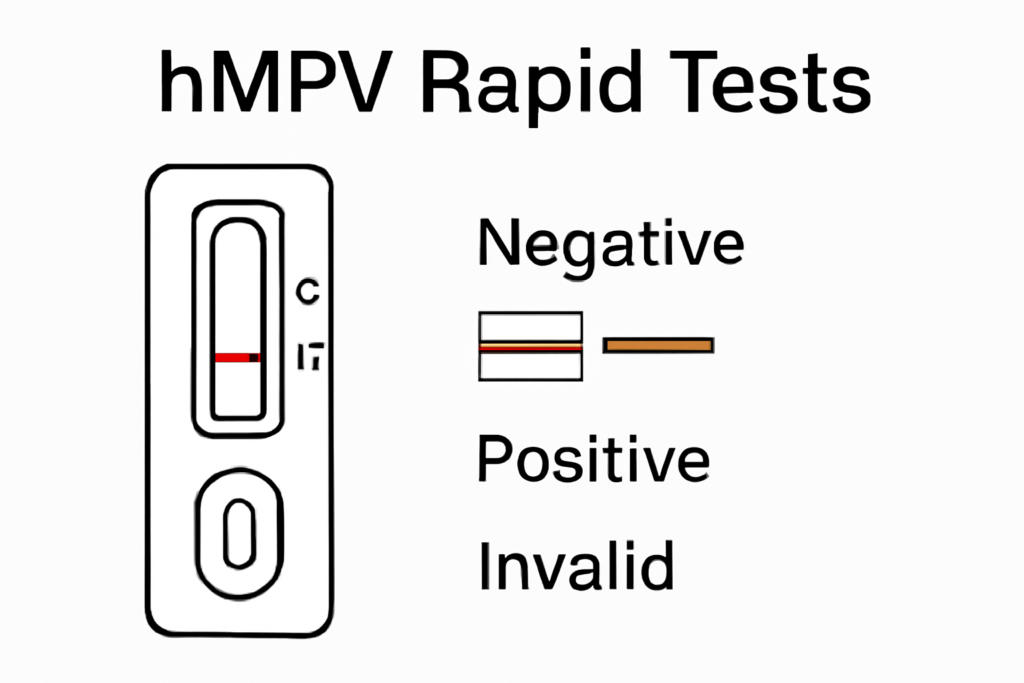
Several different rapid test formats are available for detecting hMPV, each with its own advantages and limitations. The most commonly used types are antigen-based tests and molecular-based tests, each tailored to specific clinical needs.
Antigen-Based Rapid Tests
Antigen-based rapid tests are the most widely used for detecting hMPV in clinical practice. These tests detect hMPV-specific proteins (antigens) in a sample, typically collected from the nasopharynx using a swab.
How Antigen-Based Tests Work:
-
A swab sample is collected from the patient’s respiratory tract.
-
The sample is applied to a test device, such as a lateral flow immunoassay (LFIA) device.
-
The antigen in the sample binds to monoclonal antibodies on the test strip, producing a color change or visible line, indicating the presence of hMPV.
These tests are typically easy to use, provide results in 15-30 minutes, and do not require complex equipment. However, antigen-based tests tend to be less sensitive than molecular tests, particularly in low viral load cases, which may lead to false negatives.
Advantages of Antigen-Based Tests:
-
Speed: Results are available in as little as 15 minutes, providing fast decision-making.
-
Ease of Use: They are simple to perform and require minimal technical expertise.
-
Cost-Effective: Antigen tests are typically more affordable than molecular-based methods like RT-PCR.
Limitations:
-
Lower Sensitivity: They may miss low viral load infections, leading to false-negative results.
-
Limited Specificity: Some antigen-based tests may cross-react with other respiratory viruses, although newer tests have improved specificity.
Molecular-Based Rapid Tests (e.g., RT-PCR)
Molecular-based rapid tests, such as RT-PCR (Reverse Transcription Polymerase Chain Reaction), detect hMPV RNA directly. These tests are more sensitive than antigen-based tests and can detect hMPV even in patients with low viral loads.
How Molecular-Based Tests Work:
-
A swab sample is collected and processed to extract RNA.
-
The RNA is reverse-transcribed into cDNA, which is then amplified using PCR to detect specific hMPV RNA sequences.
-
The presence of viral RNA confirms the infection.
While RT-PCR provides high sensitivity and specificity, it is more time-consuming and requires specialized laboratory equipment. These tests typically take several hours to return results, making them less suitable for point-of-care settings.
Advantages of Molecular-Based Tests:
-
High Sensitivity: They are able to detect even low levels of the virus, reducing the likelihood of false negatives.
-
Accurate Detection: These tests can confirm the presence of hMPV RNA, offering a more accurate diagnosis compared to antigen tests.
Limitations:
-
Longer Turnaround Time: Results can take several hours to process, making these tests less suitable for urgent care.
-
Higher Costs: Molecular tests generally require more expensive equipment and reagents than antigen-based tests.
Clinical Applications of hMPV Rapid Tests
hMPV Rapid Tests have several important clinical applications, particularly in environments where quick decision-making is essential, such as emergency departments, urgent care centers, and pediatric clinics.
Rapid Diagnosis of Respiratory Infections
Rapid tests can help clinicians quickly identify the cause of respiratory symptoms, facilitating timely and targeted treatment. Early detection of hMPV allows healthcare providers to rule out other pathogens, such as RSV or influenza, and to take appropriate infection control measures.
Screening and Surveillance
In hospital settings, rapid tests can be used for routine screening of patients with respiratory symptoms. By identifying hMPV carriers early, healthcare providers can initiate isolation protocols to prevent nosocomial transmission (hospital-acquired infections).
Monitoring Disease Progression
For patients with chronic respiratory diseases (such as asthma or COPD), early detection of hMPV can help prevent exacerbations and tailor patient management strategies, including the use of bronchodilators, steroids, or oxygen therapy.
Epidemiological Studies and Outbreak Investigation
hMPV Rapid Tests are valuable tools for public health surveillance. They enable rapid identification of outbreaks in healthcare facilities, schools, or communities, helping to mitigate further spread of the virus.
Benefits of Using hMPV Rapid Tests
The hMPV Rapid Test offers several clinical advantages, particularly for healthcare providers who need to quickly determine the cause of respiratory symptoms and manage patient care effectively.
Faster Diagnosis and Treatment
With results available in minutes, hMPV Rapid Tests allow clinicians to diagnose respiratory infections swiftly, leading to more effective treatment and improved patient outcomes.
Reduced Hospital Stay
By identifying hMPV infections early, healthcare providers can begin appropriate treatment more promptly, potentially reducing hospitalization time for affected patients.
Cost-Effective
Compared to traditional molecular testing methods like RT-PCR, rapid tests are often more affordable and do not require specialized equipment or trained personnel.
Better Infection Control
Rapid tests can help quickly identify patients who are infected with hMPV, enabling healthcare providers to implement infection control measures, such as isolation protocols, to prevent transmission within healthcare settings.
Conclusion: The Importance of hMPV Rapid Tests in Modern Healthcare
The availability of hMPV Rapid Tests has significantly improved the speed and accuracy of diagnosing respiratory infections, particularly in high-risk populations like children, elderly individuals, and those with compromised immune systems. These tests enable healthcare providers to quickly identify hMPV infections, differentiate them from other respiratory pathogens, and implement timely treatment and infection control measures.
While antigen-based rapid tests are an excellent tool for point-of-care testing, molecular-based tests offer higher sensitivity and specificity, making them invaluable for early detection and accurate diagnosis. Ultimately, hMPV Rapid Tests enhance patient management, improve hospital efficiency, and contribute to better infection control, making them indispensable in both clinical and research settings.
As the demand for rapid diagnostics continues to rise, hMPV Rapid Tests will play an increasingly important role in the ongoing efforts to control respiratory infections and improve public health outcomes.
For more information on hMPV Rapid Tests, their clinical applications, and available testing kits, consult with trusted medical suppliers, healthcare providers, or scientific resources.