Introduction to Phosphatidylethanolamine-Binding Protein 1 (PEBP1)
Phosphatidylethanolamine-binding protein 1 (PEBP1), also known as Raf kinase inhibitor protein (RKIP), is a versatile protein that plays an essential role in regulating multiple biological functions, including signal transduction, cell survival, apoptosis, membrane dynamics, and neurodegenerative diseases. PEBP1’s main function is as a negative regulator of the Raf/MEK/ERK pathway, a crucial signaling cascade that controls cell growth, proliferation, and differentiation.
In addition to its role in the Raf/MEK/ERK signaling pathway, PEBP1 has been implicated in a variety of other critical cellular processes, including synaptic plasticity, immune regulation, and inflammation. These functions position PEBP1 as an important player in both normal physiology and disease processes, including cancer metastasis, neurodegenerative disorders, and cardiovascular diseases.
Due to its regulatory functions and involvement in multiple disease pathways, PEBP1 has become a key target for therapeutic interventions. Detecting and quantifying PEBP1 levels can provide valuable insights into its role in various diseases, making PEBP1 ELISA an essential tool in both research and clinical diagnostics.
![AffiELISA® Bovine Phosphatidylethanolamine-binding protein 1 ELISA [ PEBP1]](https://affigen.com/cdn/shop/files/5BAFG-E4345_5D_20AffiELISA_C2_AE_20Cattle_20IFNg_20Kit_20High-Resolution_20Interferon_20Gamma_20ELISA_20Detection_b51125f7-552e-4090-aba7-ea1c4e7296fa_535x.png?v=1712854412)
What is an ELISA?
Enzyme-Linked Immunosorbent Assay (ELISA) is a widely used laboratory technique that quantifies the concentration of specific antigens or antibodies in a sample. The ELISA technique utilizes specific antibody-antigen interactions, which are measured by a colorimetric, fluorometric, or luminescent signal produced by the enzymatic activity of a substrate linked to the detection antibody.
How ELISA Works:
-
Coating: A specific capture antibody is immobilized onto a solid surface (typically a 96-well microplate).
-
Blocking: Non-specific binding sites on the plate are blocked with a protein-based solution to prevent any non-specific binding of proteins.
-
Sample Incubation: The sample (e.g., serum, plasma, or tissue lysate) containing the antigen is added to the wells, and the antigen binds to the capture antibody.
-
Detection: After washing away unbound substances, a detection antibody, which is linked to an enzyme (e.g., horseradish peroxidase), is added. The detection antibody binds to the captured antigen.
-
Substrate Addition: A substrate solution is introduced. The enzyme linked to the detection antibody catalyzes a reaction, producing a color change or light emission that is measurable by a plate reader.
Types of ELISA:
-
Direct ELISA: Antigen is directly attached to the well surface, and an enzyme-conjugated antibody is used to detect it.
-
Indirect ELISA: Uses a secondary antibody conjugated with an enzyme to detect the bound antigen.
-
Sandwich ELISA: The most common type for protein detection, where two antibodies (one for capture and one for detection) are used to “sandwich” the target antigen.
-
Competitive ELISA: The antigen in the sample competes with a labeled antigen for binding to a limited number of antibody binding sites.
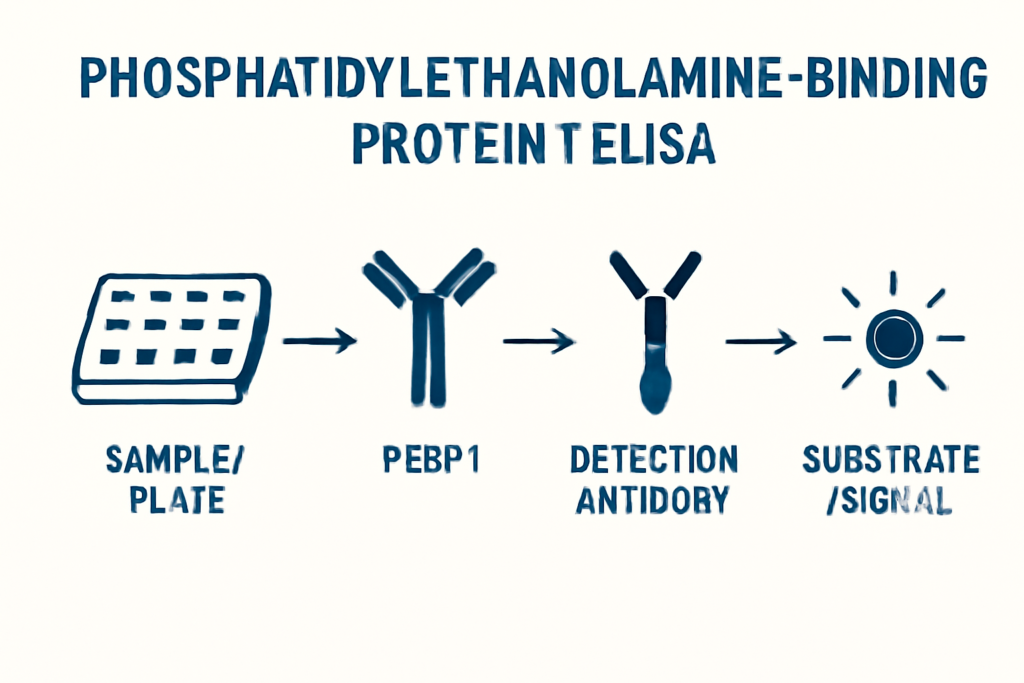
In the case of PEBP1 ELISA, sandwich ELISA is typically used because of its high sensitivity and specificity. This method ensures that only PEBP1 is measured, minimizing cross-reactivity and interference from other molecules.
PEBP1 in Health and Disease
PEBP1 is involved in several important biological processes. Understanding the role of PEBP1 in health and disease is critical, as its expression levels can have a significant impact on cellular function. Below are some of the major biological roles of PEBP1:
1. Cancer and Metastasis
PEBP1 is widely regarded as a tumor suppressor. It inhibits the Raf/MEK/ERK signaling pathway, which is involved in regulating cell growth and survival. In various types of cancer, the downregulation or loss of PEBP1 expression is associated with tumor progression and increased metastatic potential. Studies have shown that low PEBP1 levels are correlated with poor prognosis in patients with breast cancer, prostate cancer, glioblastoma, and other malignancies.
PEBP1 has also been shown to interact with matrix metalloproteinases (MMPs), enzymes that are essential for the invasion and migration of tumor cells. By inhibiting MMP activity, PEBP1 can reduce tumor cell migration and invasion, further supporting its role in metastasis suppression.
2. Neurodegenerative Diseases
PEBP1 has significant roles in synaptic plasticity, a key process in learning and memory. It is also involved in neurodegenerative diseases such as Alzheimer’s disease and Parkinson’s disease. PEBP1 modulates neuronal survival and interacts with signaling pathways that govern neuroinflammation. Changes in PEBP1 expression have been observed in neurodegenerative models, indicating its potential as a biomarker for early detection and progression tracking in these conditions.
3. Cardiovascular Diseases
PEBP1 has been implicated in vascular remodeling and inflammation, which are critical in the pathogenesis of cardiovascular diseases. PEBP1 regulates inflammatory pathways and modulates the function of endothelial cells, which line the blood vessels. Elevated levels of PEBP1 have been associated with atherosclerosis, hypertension, and other cardiovascular conditions, making it a potential target for therapeutic intervention in cardiovascular health.
4. Immune System Regulation
PEBP1 is involved in regulating immune responses by modulating the activation of various signaling pathways within immune cells. It has been shown to influence the production of cytokines and chemokines, which are vital in inflammation and immune responses. By regulating immune cell activation, PEBP1 can help control the balance between immune activation and immune suppression, making it an important protein in inflammatory and autoimmune diseases.
PEBP1 ELISA: How It Works
PEBP1 ELISA Assay Workflow
The PEBP1 ELISA provides a straightforward and highly sensitive method to quantify PEBP1 protein levels in various sample types such as serum, plasma, or tissue lysates. The general process for PEBP1 ELISA is as follows:
-
Coating the Plate: A capture antibody specific to PEBP1 is coated onto the microplate wells. This antibody binds PEBP1 from the sample if present.
-
Sample Incubation: Samples are added to the plate, allowing the PEBP1 antigen to bind to the capture antibody. The plate is then washed to remove unbound substances.
-
Addition of Detection Antibody: A secondary antibody conjugated to an enzyme (usually horseradish peroxidase (HRP) or alkaline phosphatase) is added. This antibody binds specifically to a different epitope on PEBP1.
-
Substrate Reaction: A substrate is added, which reacts with the enzyme to produce a color change. The intensity of the color is directly proportional to the amount of PEBP1 in the sample.
-
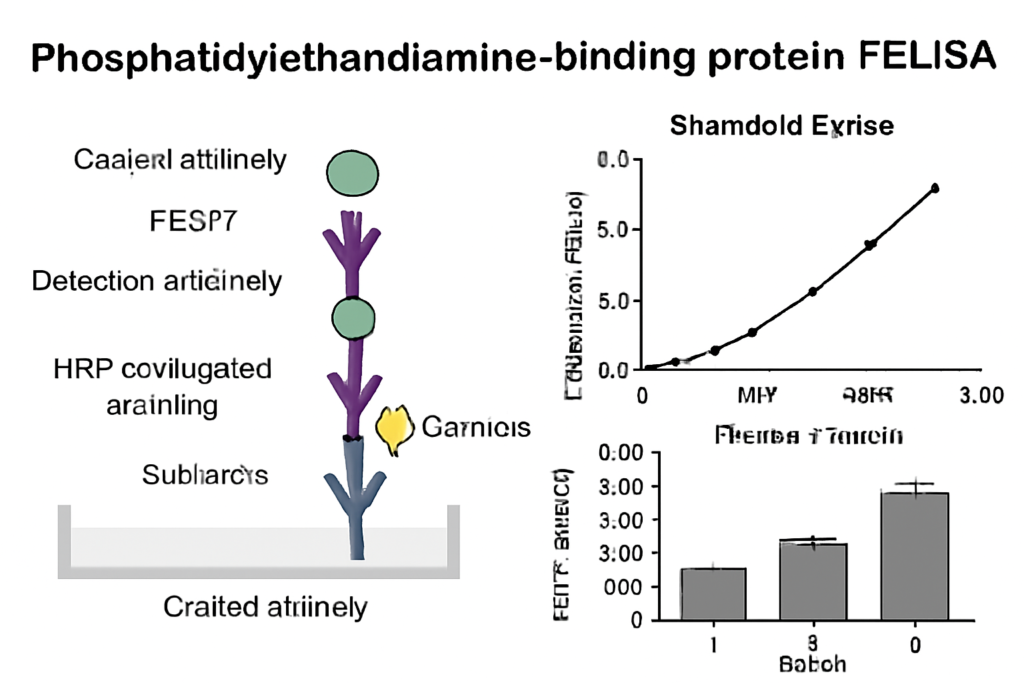
Reading the Results: The absorbance is measured using a microplate reader at the appropriate wavelength (typically 450 nm). A standard curve created using known concentrations of recombinant PEBP1 allows for the quantification of PEBP1 in unknown samples.
Applications of PEBP1 ELISA
PEBP1 ELISA has a wide range of applications in both basic research and clinical diagnostics:
1. Cancer Research and Biomarker Discovery
PEBP1 is an important biomarker for the study of cancer, particularly due to its role in metastasis and tumor progression. PEBP1 ELISA can be used to quantify PEBP1 levels in serum or plasma samples from cancer patients, providing valuable information on the metastatic potential and treatment response.
2. Neurodegenerative Disease Research
Given PEBP1’s involvement in synaptic plasticity and neuronal survival, PEBP1 ELISA can be used to assess PEBP1 levels in neurodegenerative diseases like Alzheimer’s and Parkinson’s disease. Monitoring PEBP1 levels can help track disease progression and assess the efficacy of therapeutic interventions targeting PEBP1.
3. Cardiovascular Disease Studies
PEBP1’s role in regulating inflammation and vascular function makes it an ideal target for cardiovascular disease research. Researchers can use PEBP1 ELISA to quantify PEBP1 in cardiovascular-related tissue samples, helping to explore its involvement in atherosclerosis, hypertension, and other conditions.
4. Immunology and Inflammatory Diseases
Since PEBP1 plays a key role in immune modulation, PEBP1 ELISA is useful in the study of autoimmune diseases, inflammatory disorders, and immunotherapy research. By measuring PEBP1 expression levels, researchers can gain insight into the regulation of immune responses in various diseases.
Conclusion
Phosphatidylethanolamine-binding protein 1 (PEBP1) is a crucial protein with diverse roles in cell signaling, cancer metastasis, neurodegenerative diseases, cardiovascular health, and immune system regulation. Quantifying PEBP1 using PEBP1 ELISA allows researchers to assess its expression in various diseases and offers valuable insights into the pathophysiology of these conditions.
The PEBP1 ELISA is a powerful tool for measuring PEBP1 levels with high sensitivity and specificity, providing valuable data for biomarker discovery, drug development, and disease monitoring. Its applications extend across basic research, clinical diagnostics, and therapeutic monitoring, making it a vital assay in understanding the complex roles of PEBP1 in health and disease.
For more detailed information about PEBP1 and ELISA kits available for PEBP1 detection, refer to trusted scientific resources such as PubMed, NIH, and NCBI, or consult with manufacturers of ELISA kits for experimental protocols and troubleshooting guides.